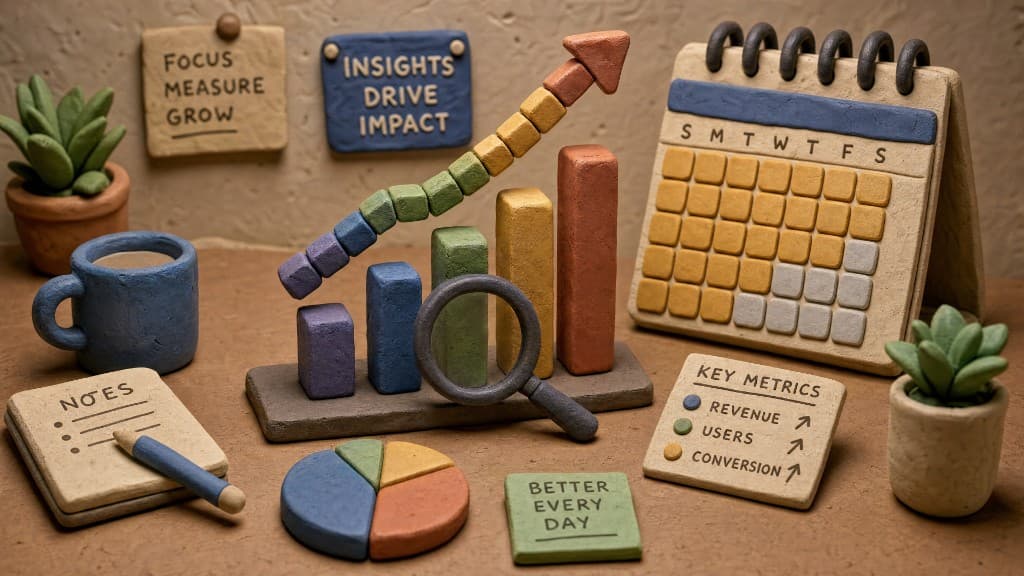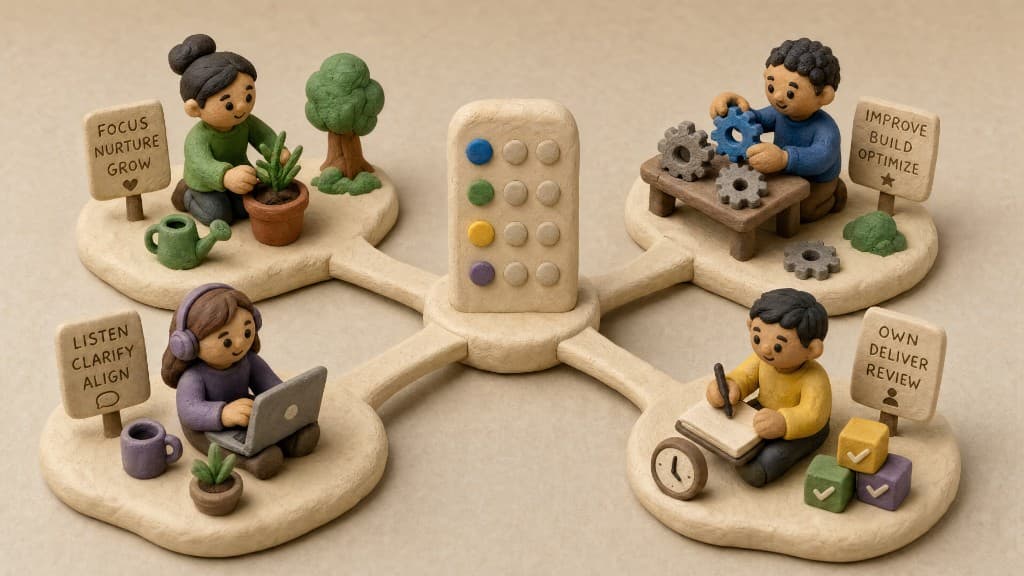
Remote-first doesn't mean hands-off. We've been fully distributed since day one, and it would be easy to mistake that for looseness. It isn't. The teams that thrive here are the ones measured on outcomes — show rate, replacement rate, client retention — not activity theater. The discipline is the point.
The metrics we actually own
Distributed teams drift when nobody can say what "good" means. So we define it precisely, and everyone owns their piece:
- Show rate — the share of booked appointments where a real, qualified prospect appears. It's the number producers feel first.
- Replacement rate — how often an appointment falls below the bar and has to be replaced free. Lower is better; spikes are a signal, not a shrug.
- Retention — whether producers stay and grow with us. It's the truest measure of whether the work is landing.
These aren't dashboards nobody reads. They're the vocabulary of every standup and every one-on-one.
Hire for judgment, train for process
Process gives us consistency. Judgment keeps it human. We look for people who can follow a framework without sounding scripted, and who'd rather ask one more qualifying question than rush a booking to hit a daily count.
In practice, that means we weight a few things heavily when we hire:
- Curiosity under pressure — do they dig, or do they read?
- Comfort with a standard — can they be measured against a number without flinching?
- Relevant context — experience in insurance, financial services, or another high-trust, high-touch environment.
The background matters less than the instinct. We can teach the product. We can't easily teach someone to care whether the appointment was worth the producer's time.
The weekly rhythm
Accountability sticks because it's routine, not dramatic. Every setter and account manager owns a weekly scorecard tied to producer results. We review it together in team standups and privately in one-on-ones — no mystery metrics, no surprise reviews.
"Distributed teams fail when standards are implicit. Ours are written down and reviewed every week."
Writing the standard down is half the battle. When expectations live in a document instead of a manager's head, a new hire in a different time zone can meet the same bar as a veteran without a single synchronous meeting.
Why we still fly everyone in
Four times a year, the whole company meets in person. Not for slide decks — for the things async work can't do well: recalibrating standards, working through hard cases side by side, and rebuilding the trust that remote collaboration quietly spends down between onsites. It's the most expensive thing on our calendar and one of the most valuable.
The failure modes we watch for
We've seen how remote ops teams go wrong, and we actively guard against it:
- Activity metrics — rewarding dials and hours instead of outcomes. It manufactures motion, not results.
- Implicit standards — "everyone just knows" is how quality quietly erodes across time zones.
- Hero culture — leaning on a few stars to paper over a broken system. It doesn't scale and it burns people out.
Avoiding those isn't glamorous. But it's exactly the kind of unglamorous work that keeps producers' calendars full — and it's the same standard we hire against. If that resonates, we're usually looking for careful people.